Twelve to go. The home stretch. We’re almost through the 2026 MLB Hall of Fame ballot.
Next, three of the six outfielders remaining on the ballot.
Bobby Abreu
The Houston Astros signed Bobby Abreu as a 16-year-old international amateur free agent out of Venezuela in August 1990. Abreu quickly showed a high-contact approach at the plate. Over his six seasons in the Astros’ minor league system, he never posted a batting average lower than .283 or an on-base percentage lower than .352. He’d make his MLB debut in September 1996, but would be used sparingly that month and the following season, batting .248/.325/.362 (84 OPS+) in 234 PA.
Following the 1997 season, MLB held an expansion draft to fill the rosters for the incoming Tampa Bay Devil Rays and Arizona Diamondbacks. Tampa Bay selected Abreu with the 6th pick, only to then trade him to the Philadelphia Phillies for shortstop Kevin Stocker.
Abreu flourished in Philadelphia, led by the same high-contact and on-base abilities he’d shown early in the minor leagues. He slashed .303/.416/.513 (139 OPS+) over his nine seasons with the Phillies, while going to a pair of All-Star Games and winning a Silver Slugger and Gold Glove Award.
With Philadelphia out of the playoff picture, they traded (or gave away, in the view of most of the team’s fans at the time) Abreu and right-hander Cory Lidle to the New York Yankees for four low-level minor leaguers: shortstop C.J. Henry, catcher Jesus Sanchez, left-hander Matt Smith, and right-hander Carlos Monasterios. Over his two-plus seasons in New York, Abreu hit .295/.378/.465 (120 OPS+).
Abreu signed a one-year deal with the Los Angeles Angels that offseason. He’d re-sign another two-year deal, with a team option for a third season, with the team the subsequent winter. He’d spend four years with the Angels, hitting .267/.364/.412 (114 OPS+).
He’d spend a few months of the 2012 season with the Los Angeles Dodgers and then sat out the 2013 season, before joining the Mets for his final season in 2014. Abreu spent parts of 18 seasons in the majors, hitting .291/.395/.475 (128 OPS+) with 574 2B, 288 HR, and 400 SB. He was a two-time All-Star, won a Silver Slugger, a Gold Glove, and the HR Derby before the 2005 All-Star Game. He totaled 60.2 WAR.
Torii Hunter
The Minnesota Twins used the 20th overall pick in the 1993 Draft to select Torii Hunter out of high school (Pine Bluff, Arkansas). The pick was compensation the Twins received after seeing right-hander John Smiley depart in free agency for the Cincinnati Reds following the 1992 season. Hunter worked his way up through the team’s minor leagues, making his debut in August 1997 (one game defensively) and a handful of appearances in 1998 (19 PA in 6 G) before seeing regular at-bats for the first time in 1999.
Hunter struggled to open the 2000 season before being optioned down to Triple-A. He’d work out some mechanical issues in his swing and catch fire in the minors. A 16-game hitting streak in June would be enough to force the Twins to bring him back up. It didn’t take long for Hunter to become a fan favorite in Minnesota, and he’d remain a part of the club’s outfield through the 2007 season.
Hunter spent eleven seasons with the Twins, slashing .271/.324/.469 (104 OPS+) with two 100-RBI seasons, 259 2B, 192 HR, and 126 SB with a pair of All-Star appearances (including the 2002 game when he robbed Barry Bonds of a home run) and seven straight Gold Glove Awards in center field.
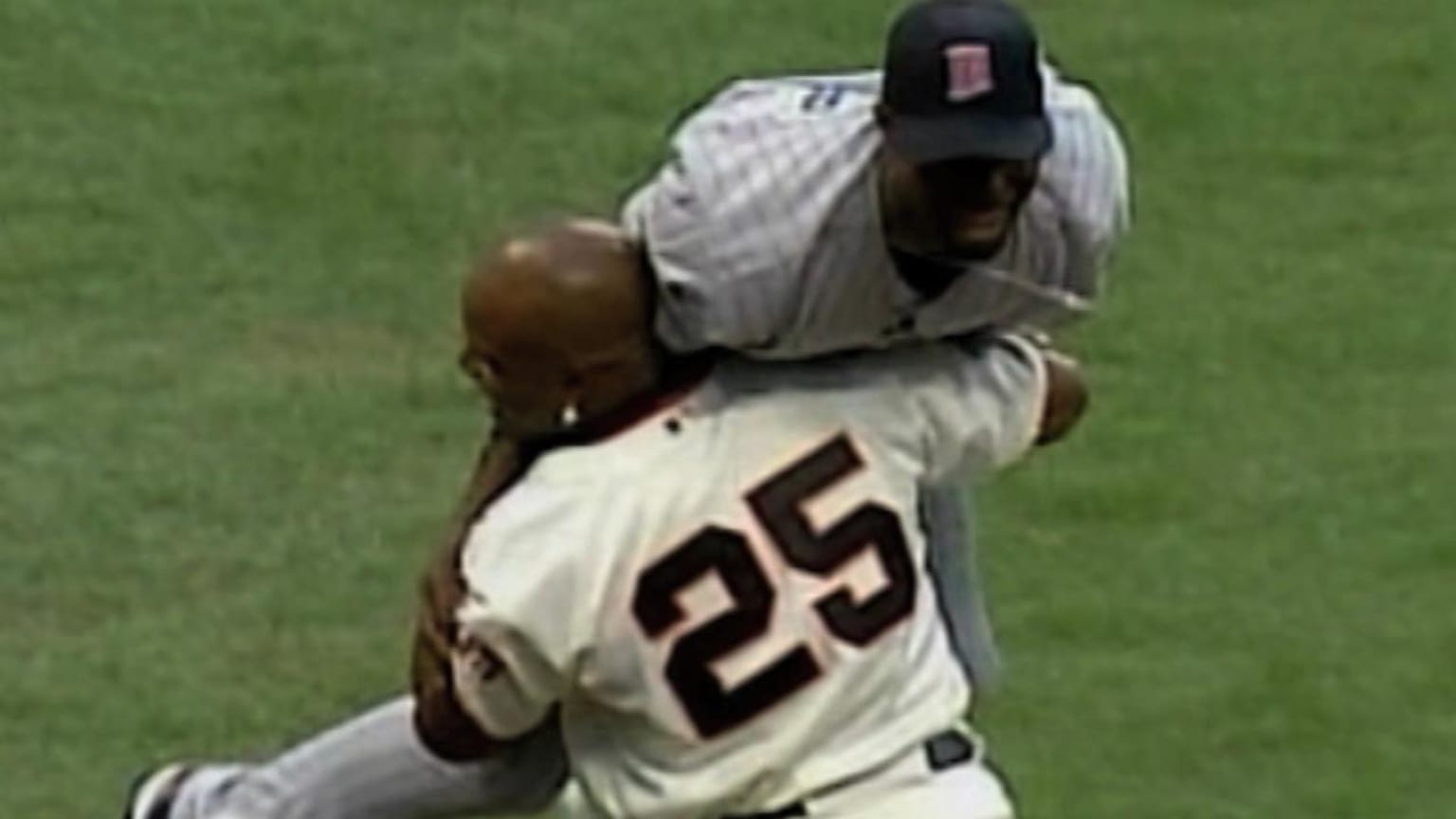
Minnesota made an effort to re-sign Hunter before he reached free agency, but he agreed to a five-year, $90 million contract with the Los Angeles Angels. He thrived with the Angels, making two more All-Star rosters while winning his first Silver Slugger Award and two more Gold Gloves (giving him nine consecutive). He’d bat .286/.352/.462 (122 OPS+) as an Angel.
Hunter spent two years in Detroit after leaving Los Angeles, winning a second Silver Slugger, and then returned to Minnesota for a final season before retiring. Overall, he spent 19 years in the big leagues, hitting .277/.331/.461 (110 OPS+) with 498 2B, 353 HR, 195 SB, and 1391 RBI. He totaled 50.6 WAR. He was a five-time All-Star and won nine straight Gold Glove Awards.
Carlos Beltrán
The Kansas City Royals used their 2nd-round pick in the 1995 Draft to select Carlos Beltrán out of high school in Puerto Rico. It took him just three years to work his way through the minor leagues, skipping Triple-A entirely, before making his debut in September 1998 (63 PA in 14 G). Kansas City got a glimpse of what Beltrán would offer the next season, as he’d hit .293/.337/.454 (99 OPS+) with 27 2B, 22 HR, 108 RBI, and 27 SB while winning the AL Rookie of the Year Award.
Beltrán continued to produce for the Royals, but the small-market team faced the reality that they wouldn’t sign him to a long-term extension. Beltrán dealt with trade rumors throughout the 2002 and 2003 seasons before the Royals finally started to dismantle in 2004. Just days after being named to his first All-Star team, the Royals would trade Beltrán to the Houston Astros as part of a three-team trade that brought infielder Mark Teahen, right-hander Mike Wood, and catcher John Buck to Kansas City. He’d hit .287/.352/.483 (111 OPS+) with 156 2B, 123 HR, and 164 SB over his seven seasons with the Royals.
After finishing the 2004 season in Houston and starring during the postseason (tying a postseason record with 8 HR), he’d reach free agency that offseason and signed a seven-year, $119 million contract with the New York Mets. He was just the tenth player in league history to sign a deal exceeding $100 million.
Beltrán’s tenure in New York proved to be the most successful of his career. He slashed .280/.369/.500 (129 OPS+) with 208 2B, 149 HR, and 100 SB over his seven seasons in Queens. He’d make five more All-Star appearances, win two Silver Sluggers, and three Gold Glove Awards while receiving MVP consideration in four seasons.
But his defensive range had started to decline by 2011, prompting the Mets to move him to right field. By midseason, he’d waive his no-trade clause to accept a move to the San Francisco Giants (bringing right-hander Zack Wheeler back to New York).
Beltrán signed a two-year, $26 million contract with the St. Louis Cardinals in free agency that winter. He’d make two more All-Star appearances with the Cardinals, hitting .282/.343/.493 (127 OPS+). That would be followed by a three-year, $45 million deal with the New York Yankees, where he’d bat .270/.327/.470 (116 OPS+) and another All-Star Game. He’d spent half the 2016 season in Texas and then one final year with Houston before calling it a career.
Beltrán spent 20 years in the majors, hitting .279/.350/.486 (119 OPS+) with 565 2B, 435 HR, 1587 RBI, and 312 SB while winning a Rookie of the Year Award, two Silver Sluggers, three Gold Gloves, and getting selected to nine All-Star Games. He totaled 70.0 WAR in his career.
Beltrán’s career can’t be discussed without including his World Series title with the 2017 Astros, though that championship didn’t come without controversy. Two years after the WS, the Astros were accused of — and penalized for — an elaborate sign-stealing scandal. Several members of the club’s staff illegally used a camera system to tape opposing teams' signs and then relay them to Astros players via a series of coded sounds (such as banging a trash can).
MLB’s investigation concluded that the activities occurred during the 2007 regular season and postseason, and part of the 2008 regular season. The club was fined $5 million and stripped of multiple draft picks. General manager Jeff Luhnow and manager A.J. Hinch were both suspended (and subsequently fired by owner Jim Crane). Alex Cora, Hinch’s bench coach at the time but now Boston’s manager, was also suspended for a season (he would “resign” rather than be fired by the Red Sox, only to be “re-hired” a year later).
Beltrán was the only player named in MLB’s investigation, but since he’d retired, no punishment was levied. The Mets, however, had just named him as their new manager for the upcoming season, only to fire him days after MLB’s report was released. Beltrán still hasn’t received another chance to manage.